
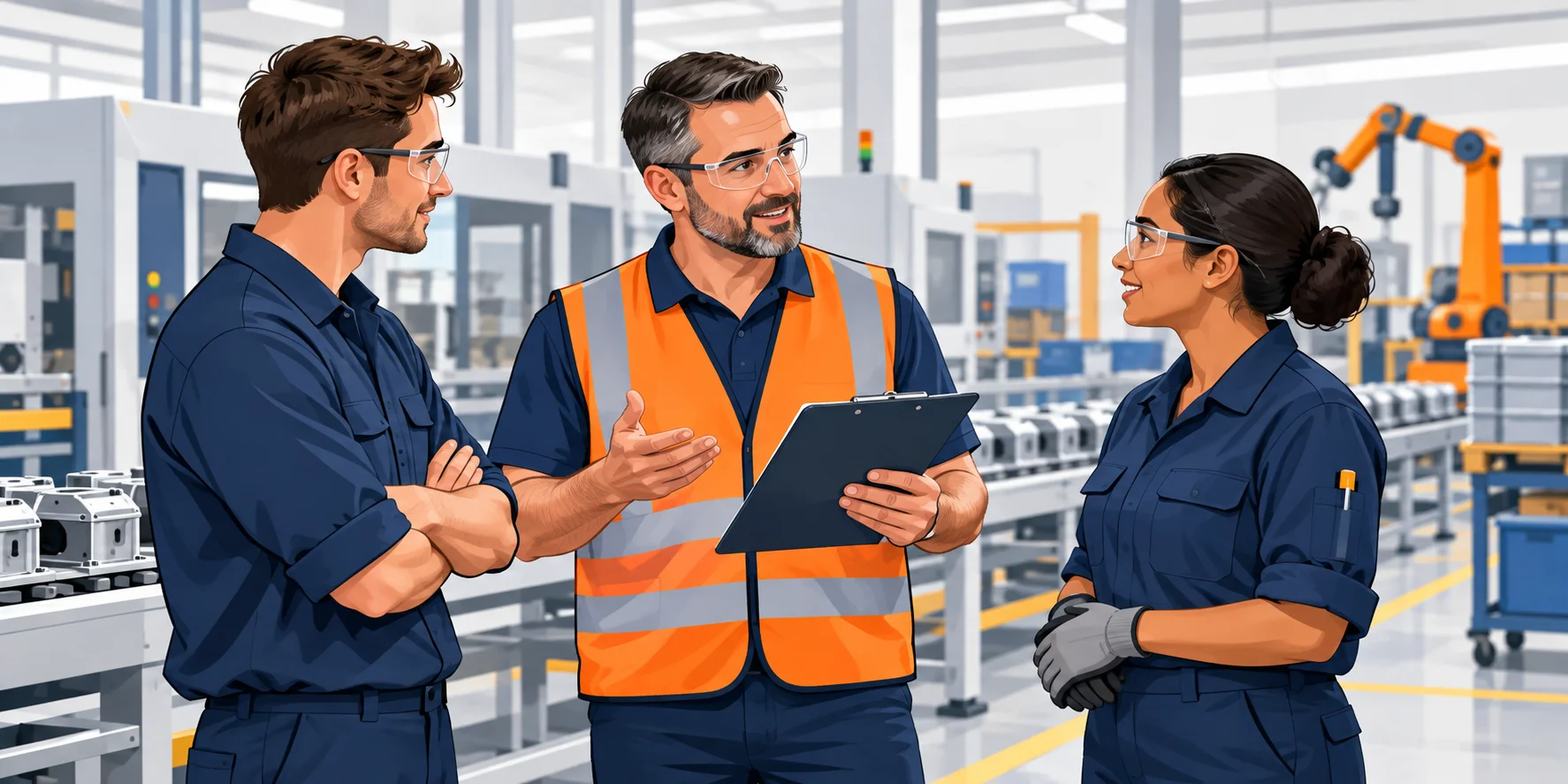
Understand the work behind manufacturing career paths
Manufacturing career paths extend across the people who make products, check requirements, maintain equipment, and improve processes. Understanding how these functions connect can help you choose relevant job searches and ask better questions during interviews.
The boundaries vary by employer. One facility may have separate specialists for each function; another may combine responsibilities within a smaller team. Use this guide as an introduction, then read the duties and qualifications in the actual posting.
Production: carrying out the manufacturing process
Production postings may involve operating equipment, assembling components, handling materials, or completing records. The specific work depends on the product and process. A CNC operator, assembler, and production associate may all support output while using different tools and skills.
When comparing openings, ask which tasks are assigned to the role, who provides instructions, and what training is available. For machining positions, clarify the division between running established work, setup, and programming. Describe your own experience at the same level of detail.
Quality: checking products against requirements
The U.S. Bureau of Labor Statistics describes quality control inspectors as examining products and materials for defects or departures from specifications. Duties can include measurement, testing, and reporting results. The tools and inspection methods depend on the workplace.
For a quality inspector job, ask what you would inspect and how results are recorded. Clarify whether the position involves incoming material, work during production, or finished items. Distinguish experience operating inspection equipment from experience developing inspection routines.
Maintenance: supporting equipment reliability
BLS identifies installing, maintaining, and repairing factory equipment among the work of industrial machinery mechanics, maintenance workers, and millwrights. These are related occupations with differing responsibilities; an employer’s maintenance title should be read alongside its equipment list and duties.
Ask about scheduled maintenance, troubleshooting, shift coverage, and who supports unfamiliar problems. Explain which equipment you have worked on and what you handled independently. Avoid assuming that experience with one machine or repair task establishes competence across every system in a plant.
Engineering: evaluating and improving how work gets done
BLS describes industrial engineers as developing systems that bring together people, machines, materials, information, and energy. Their work includes evaluating processes and identifying improvements. Manufacturing engineering postings may emphasize a particular process, equipment introduction, or production support, so examine each position individually.
Ask which processes or projects you would own and how changes are reviewed. If you describe an improvement in your application, explain your contribution, how the result was checked, and who else participated. Keep technical leadership separate from responsibilities you only observed.
An example of how factory teams work together
Consider an illustrative machining scenario: an operator records a measurement that needs review. Production communicates the observation through the plant’s established process. Quality reviews the requirement and inspection information; maintenance may become involved if equipment condition is a concern; engineering may help evaluate the process.
The sequence and decision authority depend on the employer. This example is not a repair procedure or a description of every facility. Its purpose is to show why accurate records and clear communication matter across departments. No single job title tells you who can approve a change or authorize work to continue.
Which manufacturing role should you explore?
Start with tasks you can already demonstrate and skills you want to develop. Compare several postings to identify the qualifications they actually require. Interest in a function is a starting point; it does not replace required training, experience, or credentials.
- If you enjoy hands-on, repeatable processes, examine production and assembly duties.
- If you are interested in measurement and documented requirements, review quality inspection roles.
- If you have relevant equipment and repair experience, compare maintenance positions carefully.
- If your background supports process analysis and technical projects, evaluate engineering responsibilities.
- If you want to lead people, ask how supervisory duties differ from technical ownership.
Questions that reveal how a manufacturing team operates
Use interviews to understand the working relationships behind the posting. Prepare an example of communicating a problem or handing work over to someone else.
- Who would I work with during a normal shift?
- Which decisions belong to this role, and which require review?
- How are production, inspection, and maintenance concerns communicated?
- What training and technical support are available on my shift?
- What would I be expected to handle independently after onboarding?
Explore your next manufacturing career step
Use FactoryRoles specialty pages to compare CNC, maintenance, and manufacturing engineering opportunities. For inspection roles, search quality inspector and related titles, then read the measurement and documentation requirements.
The linked BLS occupation profiles provide broader background. Pair that information with current job descriptions, and use the candidate guides to prepare your resume and interview examples. Choose the role based on its actual work, learning requirements, and conditions.